Why it matters more here
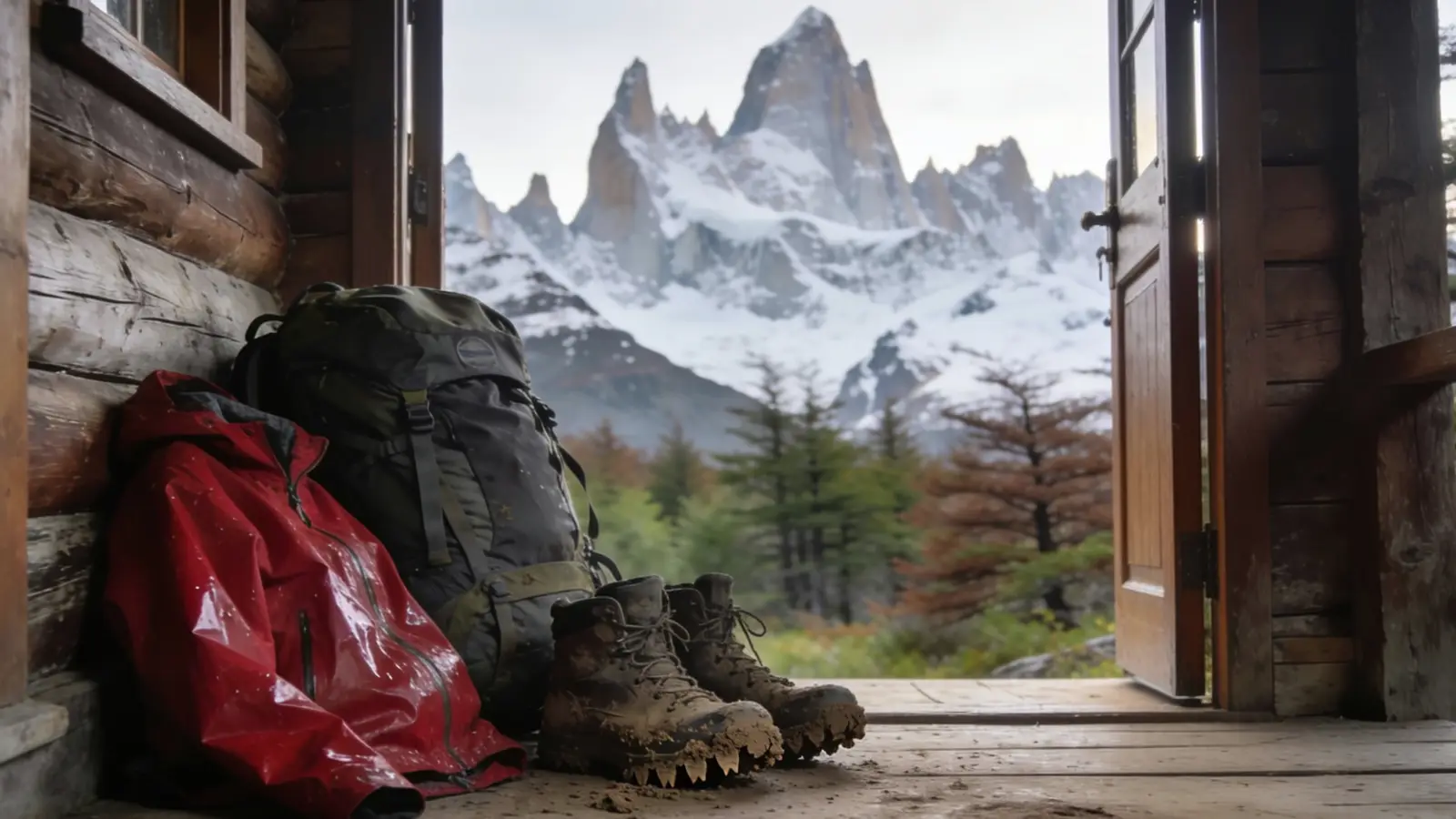
In Patagonia everything grows slowly. A lenga beech takes decades to reach a person's height, and a burned forest does not recover within a human lifetime. The fires of 2005 and 2011–2012 in Torres del Paine —both caused by visitors— destroyed tens of thousands of hectares that still look black from the trail.
That is what lies behind rules that might seem excessive anywhere else.
Fire: the non-negotiable rule
No fires outside designated areas. Ever, under any circumstances. That includes camp stoves outside authorized areas, candles and, of course, cigarettes on the trail.
In national parks, fire is prohibited except at the marked spots in concession-run campgrounds. A park ranger who sees smoke is required to evacuate the area.
Pack it in, pack it out
There is no trash collection along the road or on the trails. Everything you bring goes back with you: wrappers, cigarette butts, food scraps, toilet paper.
- Carry a bag for your own trash from day one.
- Fruit peels also get packed out: they are not “biodegradable” at these temperatures, and they last for months.
- If there is a toilet, use the toilet. If there isn't, bury waste twenty centimeters deep and far from water, and pack out the paper.
With wildlife, keep your distance
Wildlife here is not used to people, and repeated disturbance can cost animals their breeding season.
- Penguins are watched from the trail. On Isla Magdalena and at Parque Pingüino Rey there are mandatory minimum distances, and they exist for a reason.
- No drones over bird colonies or guanacos.
- Do not feed any animal, not even the fox that approaches the parking lot. A fox that learns to beg for food ends up run over.
- If an animal changes what it was doing because of you, you are already too close.
Water and soap
Rivers and lakes are the water source for everything downstream, towns included.
- Wash dishes and yourself sixty meters or more from any stream, river or lake.
- Soap, even if it says “biodegradable,” does not go into the water: use it far away and let it filter into the ground.
On the trail
- Stay on the marked path, even when it is muddy. Walking around the mud is what turns one trail into five parallel trails and kills the vegetation along the edges.
- Do not build new cairns: they confuse the people coming behind you.
- Take nothing as a souvenir. Not a stone, not a flower, not a piece of glacier ice.
Where the money goes
This is the part that a directory like this one can genuinely change. A trip either leaves money in a place or it doesn't, and that comes down to small decisions:
- Eat where local people cook, rather than at the chain found in every city.
- Hire local guides and operators. They also know things that are not on the internet.
- Buy crafts from the people who make them —Yagán basketry from Villa Ukika, weaving from Coyhaique— and not the imported replica.
- Stay in locally owned hostels and hotels.
Every business on this portal is from the six cities. There are no chains.
The S Seal
Sernatur (Chile's National Tourism Service) awards the Sustainable Tourism Distinction, the “Sello S” (S Seal), to lodgings, tour operators and agencies that meet environmental, sociocultural and economic criteria verified by an independent certifier. It is voluntary and costs money to obtain, so having it says something real.
The list of certified establishments is on Sernatur's tourism services portal.
Accessible tourism
Traveling with care also means making the trip possible for more people. Chile has an Accessible Tourism Seal (Sello de Turismo Accesible), and several museums, visitor centers and boat trips in the area are adapted.
The honest thing to say is that coverage is uneven and it is best to ask before booking, with your specific needs in writing. Each business's phone number is on its listing.
Your travel footprint
Getting all the way here burns fuel, and there is no way around that. What you can do:
- Stay longer in fewer places, instead of taking a domestic flight every two nights.
- Share transfers and take the bus wherever there is one.
- Bring your own bottle: tap water is safe to drink in all six cities, and there is no need to buy a plastic bottle every day.
Last reviewed . Entry rules, timetables and departure frequencies change: when something hinges on your own situation, confirm it with the official source linked in the text.