By Equipo VivePatagoniaEditorial team
The Cueva del Milodón (Milodón Cave) shows up on nearly every itinerary heading to Torres del Paine, almost always with some legend attached. The documented history is better.
Three caves and a chair
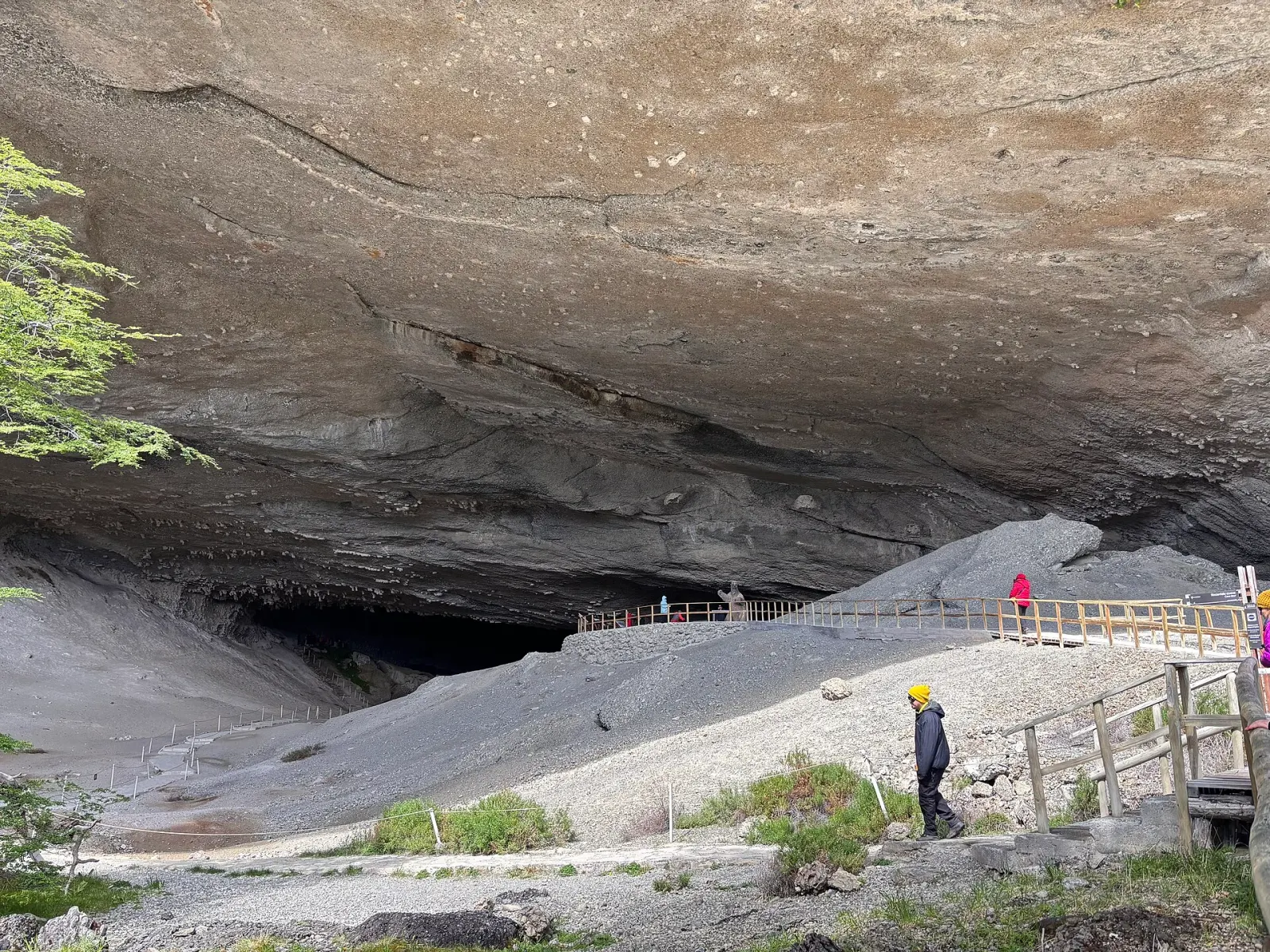
Cueva del Milodón Natural Monument lies 25 kilometers north of Puerto Natales, on Cerro Benítez. It covers 189.5 hectares, is managed by CONAF (Chile’s national forest and parks service) and brings together three caves —Milodón, Medio and Chica—, several rock shelters and a rock formation known as the Silla del Diablo (Devil’s Chair). The caves and the Silla del Diablo have been a Historic Monument since 1968, and the area has been a Natural Monument since 1993.
The largest cave is about 200 meters deep and some 30 meters high. It wasn’t carved by the sea, as is often repeated: it was shaped by the waves of a lake that formed at the foot of the ice when the glaciers, which covered the area some 20,000 years ago, began to retreat.
The mylodon
Mylodon darwinii was a ground sloth up to two and a half meters tall and weighing between one and two tons. Dates from its remains in the cave range from about 13,500 to about 10,200 radiocarbon years before present, a period when the glaciers advanced again, and show no traces of human activity. The researchers who published them even suggest the animal may have used the cave to hibernate.
CONAF also mentions remains of other extinct animals, such as a dwarf horse and a large guanaco, and one study describes the cave as a hunting ground for the Patagonian panther. The monument also holds evidence of very ancient human occupation, in the Cueva del Medio and the nearby rock shelters.
Who found it
Around 1895, settler Hermann Eberhard found a piece of hide in the area, with hair and osteoderms, the small bony plates the animal had beneath its skin. Otto Nordenskjöld visited the cave in 1896 and 1897, and in 1899 Rodolfo Hauthal, of the Museo de La Plata, found another hide, bones and claw remains. Eberhard’s hide ended up in London, at the Natural History Museum; Hauthal’s stayed in La Plata.
Finding hide with hair from an animal extinct for thousands of years led some naturalists of the day to think the mylodon might still be alive. It wasn’t: what there was, was a dry, cold cave that preserved its remains exceptionally well.
The cave and Bruce Chatwin
International fame came with “In Patagonia,” the travel book Bruce Chatwin published in 1977. Chatwin writes that as a boy he saw, in his grandmother’s cabinet, a piece of skin sent to her by a cousin of hers, the sailor Charles Milward, and that the book grew out of following that memory all the way to this cave.
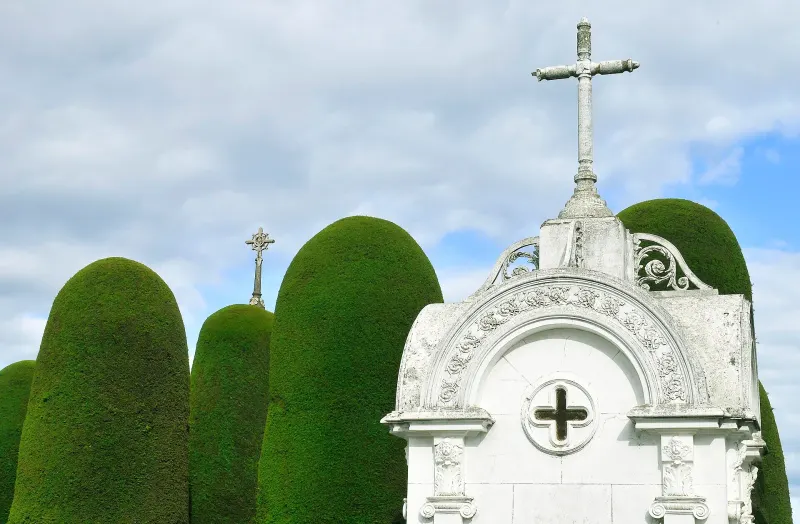
It’s a great book, and it isn’t a historical document: the scientific literature credits Eberhard with the first find. Milward, as it happens, is buried in the Punta Arenas cemetery.
Visiting
- It’s 25 kilometers north of Puerto Natales, on the way to Torres del Paine.
- CONAF’s rules apply: no fires, pets or drones, always stay on the trail, and don’t feed the wildlife.
- Sightings in the surrounding area include foxes, lesser grisons (quiques), skunks (chingues) and pumas, and birds such as the crested caracara, the eagle and the condor. Seeing them is down to luck.
Last reviewed
See the full guide to Puerto Natales