By Equipo VivePatagoniaEditorial team
Puerto Natales has a reputation as a place you pass through: the last town before Torres del Paine, where you stock up, sleep and head out early. It’s worth giving it a day of its own.
A name like a farewell
Última Esperanza Sound (“Last Hope”), the arm of the sea facing the town, owes its name, by the most widely cited account, to Juan Ladrillero, who in 1557 was searching from the Pacific for the entrance to the Strait of Magellan. Natales, according to the municipality, comes from the river two German settlers named “Natalis” because they found it on December 24.
The town is much younger than those names: it was founded on May 31, 1911, on land that a 1906 decree had set aside near the river mouth for a settlement. Before the settlers, the area was Kawésqar and Aónikenk territory, and the first ranchers, such as Hermann Eberhard, arrived in the late nineteenth century.
Bories: the factory on the edge of the fjord
Five kilometers north of downtown stands the former Frigorífico Bories (Bories Meatpacking Plant), a national Historic Monument since 1996. It belonged to the Sociedad Explotadora de Tierra del Fuego and is named after Carlos Bories, governor of Magallanes from 1898 to 1904. Its architecture and machinery come from post-Victorian England, and at its peak it exported more than three thousand sheep a day to Europe; hundreds of workers rode the train from Natales every day to work there.
It wasn’t only industry. In January 1919, a labor dispute that began at Bories ended with ten dead and some twenty wounded, and the town remembers it with the Monument to the Worker Martyrs, unveiled in 2010.
The waterfront
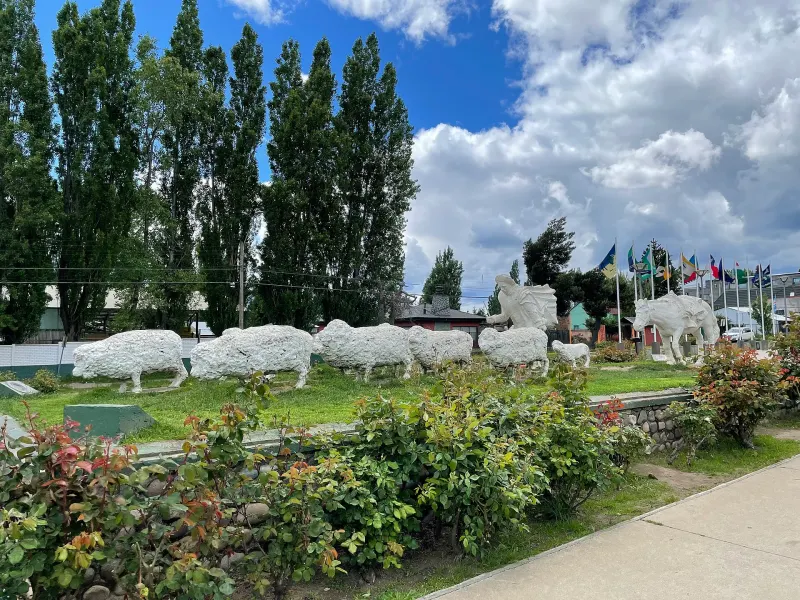
Avenida Pedro Montt runs along the water and is the best walk in town. On it stands the Monumento al Viento (Monument to the Wind) by sculptor Marcela Romagnoli: two bronze figures weighing half a ton each, unveiled in 2012, that seem to be swept along by the wind. Around town there are other sculptures, such as a bronze mylodon and a monument to Juan Ladrillero, and all that remains of an old pier are its pilings.
A fjord full of birds
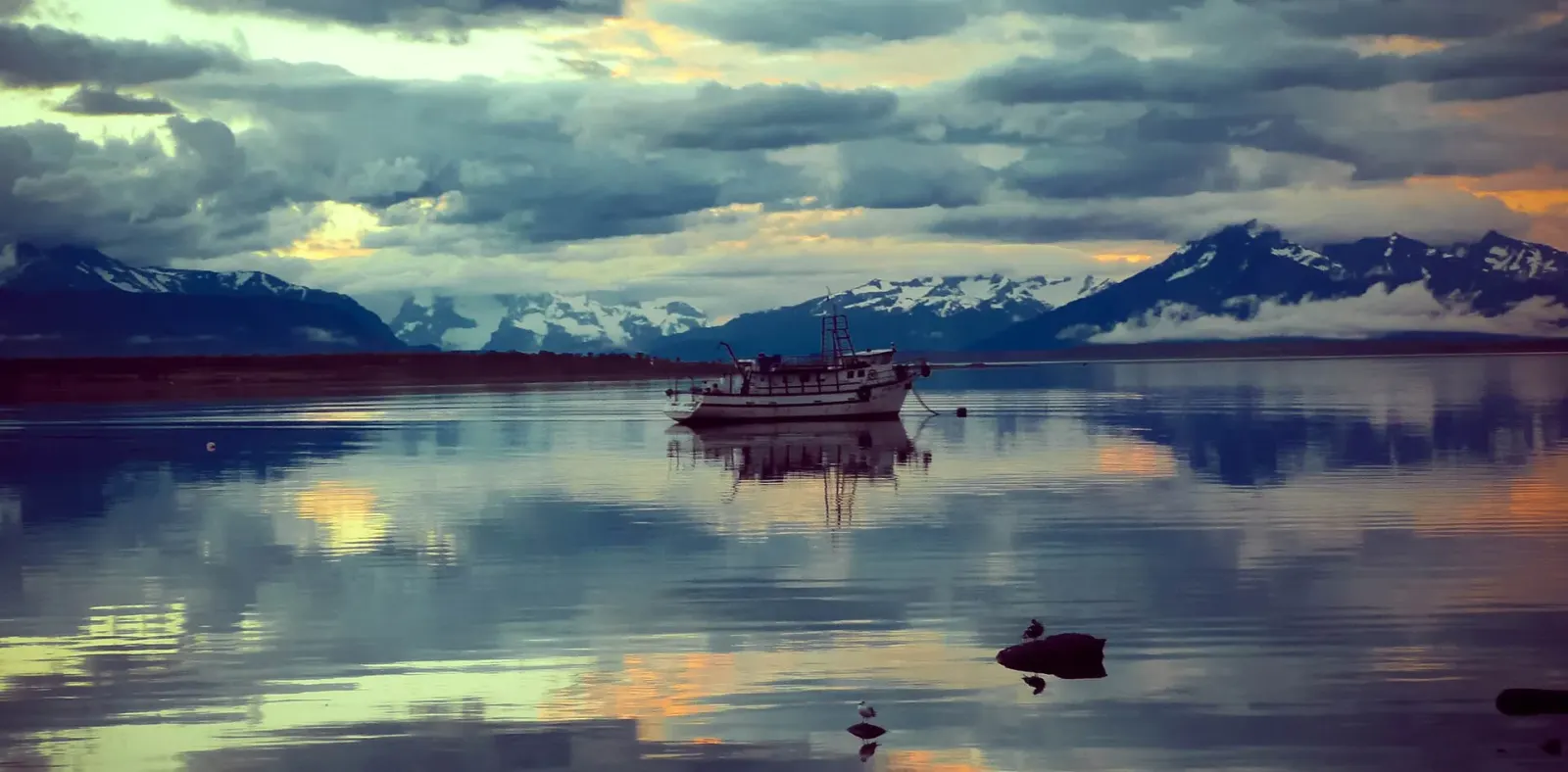
In front of the town, the water is far more than scenery. A full-year study of the fjord and the Señoret Channel recorded thirty species of waterbirds, among them the black-necked swan, the coscoroba swan and the Chilean flamingo, along with colonies of imperial shag, rock shag and black-faced ibis in spring and summer. In fall, when many birds molt and overwinter, the fjord hosts one of the largest concentrations of birds in the region.
On clear days you can see Mount Balmaceda to the north, 2,035 meters high, with its glaciers.
Before heading into Torres del Paine
For those traveling on, Natales is the place to sort out whatever can’t be sorted out inside the park:
- Park accommodations. Have your campsite or refugio (mountain hut) booking in hand before you set out, and check the current rules, which get revised.
- Gear for any weather. A single day can bring sun, wind and rain.
- The fire rule. Lighting any kind of fire is prohibited in Torres del Paine, and Law 20,653 punishes it with fines and even prison. Cooking is allowed only on approved stoves and in designated areas.
That rule has a history. In 2005, a fire accidentally started by a visitor burned more than 15,000 hectares, and between December 2011 and February 2012 another, which began when a tourist burned trash, swept across more than 17,000. CONAF, Chile’s national forest service, spent years restoring the burned land, planting thousands of lenga beech trees.
Last reviewed
See the full guide to Puerto Natales