By Equipo VivePatagoniaEditorial team
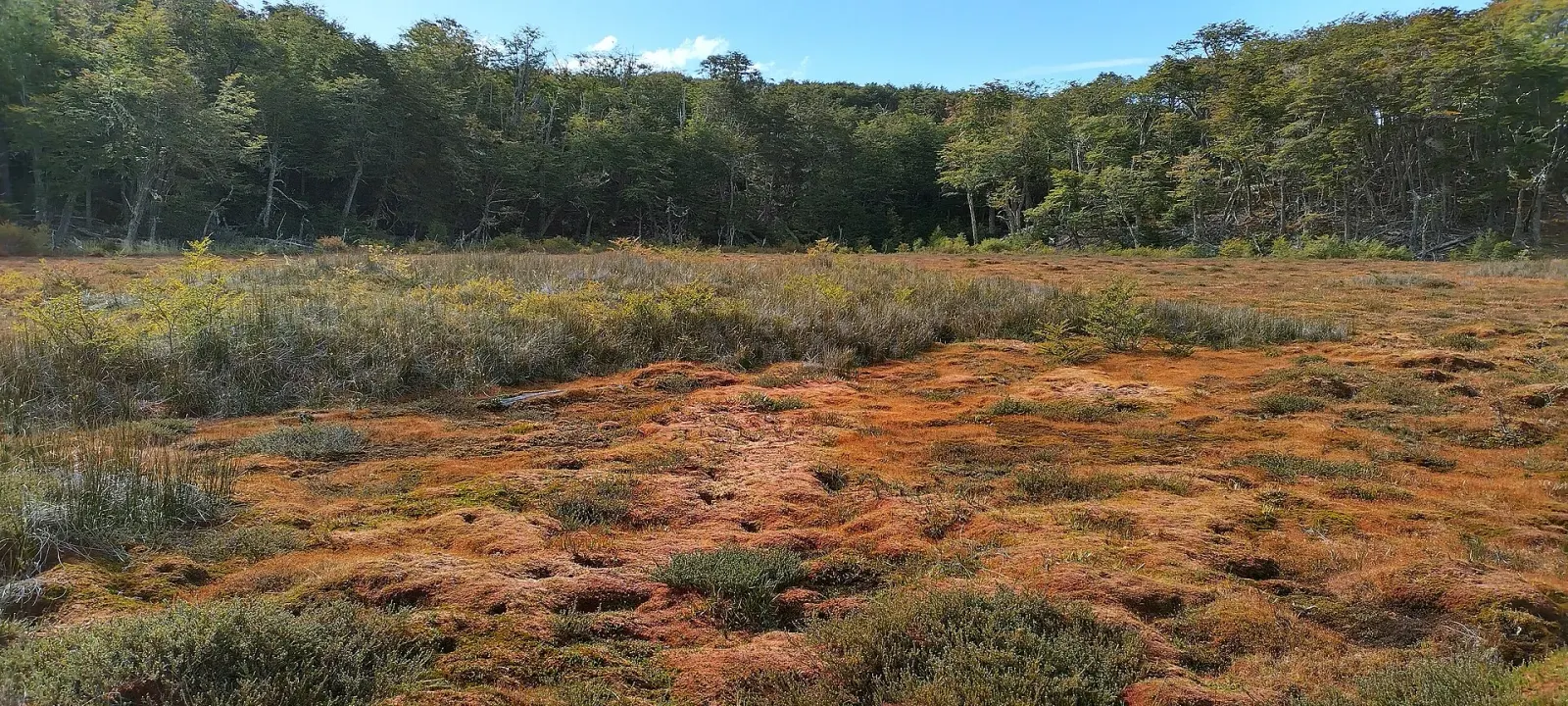
On the outskirts of Puerto Aysén, and across much of humid Patagonia, there are stretches of land that from a distance look like waterlogged pastures, with reddish and green patches among the grass. They aren’t pastures: they are peatlands. The field guide “Explorando Aysén” (Exploring Aysén), published by the Museo Regional de Aysén (Aysén Regional Museum), lists the ones around the city among the area’s heritage sites.
What a peatland is
Chilean law defines it as a type of wetland characterized by producing peat: a mix of plant remains in varying stages of decay, built up in waterlogged conditions. Where the ground is always saturated, plant remains lack the oxygen to break down completely, and they pile up layer upon layer.
In Aysén, three types are studied most: Sphagnum moss peatlands; cushion peatlands, formed by plants that grow in dense mounds; and mixed peatlands.
Why they matter
Peatlands store carbon and regulate water. Sphagnum moss, which forms many of them, holds moisture remarkably well: it works like a sponge, soaking up water when it rains and releasing it little by little.
That same quality turned it into a commodity. Sphagnum is harvested and exported, mainly to Asia, for growing orchids. A study on Aysén by the Instituto Forestal (Forestry Institute) warns that overharvesting puts water, carbon and the integrity of the ecosystem at risk, and that where the moss dominates, harvesting should be shallow, no more than ten centimeters, so it can regenerate.
What the law says
Since 2024, Law 21,660 has protected peatlands as strategic reserves for climate, water and biodiversity. It bans peat extraction nationwide and allows Sphagnum magellanicum moss to be harvested only under a management plan approved by the Servicio Agrícola y Ganadero (Agriculture and Livestock Service), with a favorable report from the Servicio de Biodiversidad y Áreas Protegidas (Biodiversity and Protected Areas Service), which is also responsible for enforcement.
The distinction matters: the law doesn’t ban the moss; it bans removing the peat, which takes a very long time to form.
How to enjoy them without harming them
- Always stay on the trail or boardwalk. Footsteps compact the peat, and the tracks are slow to close.
- Don’t take any moss, not even a handful: harvesting it is regulated by law.
- No fires, no cigarette butts. Dry peat burns, and a peat fire can spread beneath the surface.
- Don’t post the exact location of a little-visited peatland. For a fragile place, the best protection is not being overrun by people.
Last reviewed
See the full guide to Puerto Aysén