By Equipo VivePatagoniaEditorial team
On clear days, you can see the coast of Tierra del Fuego from Punta Arenas. Porvenir lies on the other side, and in a single day you can make the crossing, walk a town with a history of its own and visit a lagoon that fascinates scientists.
The crossing
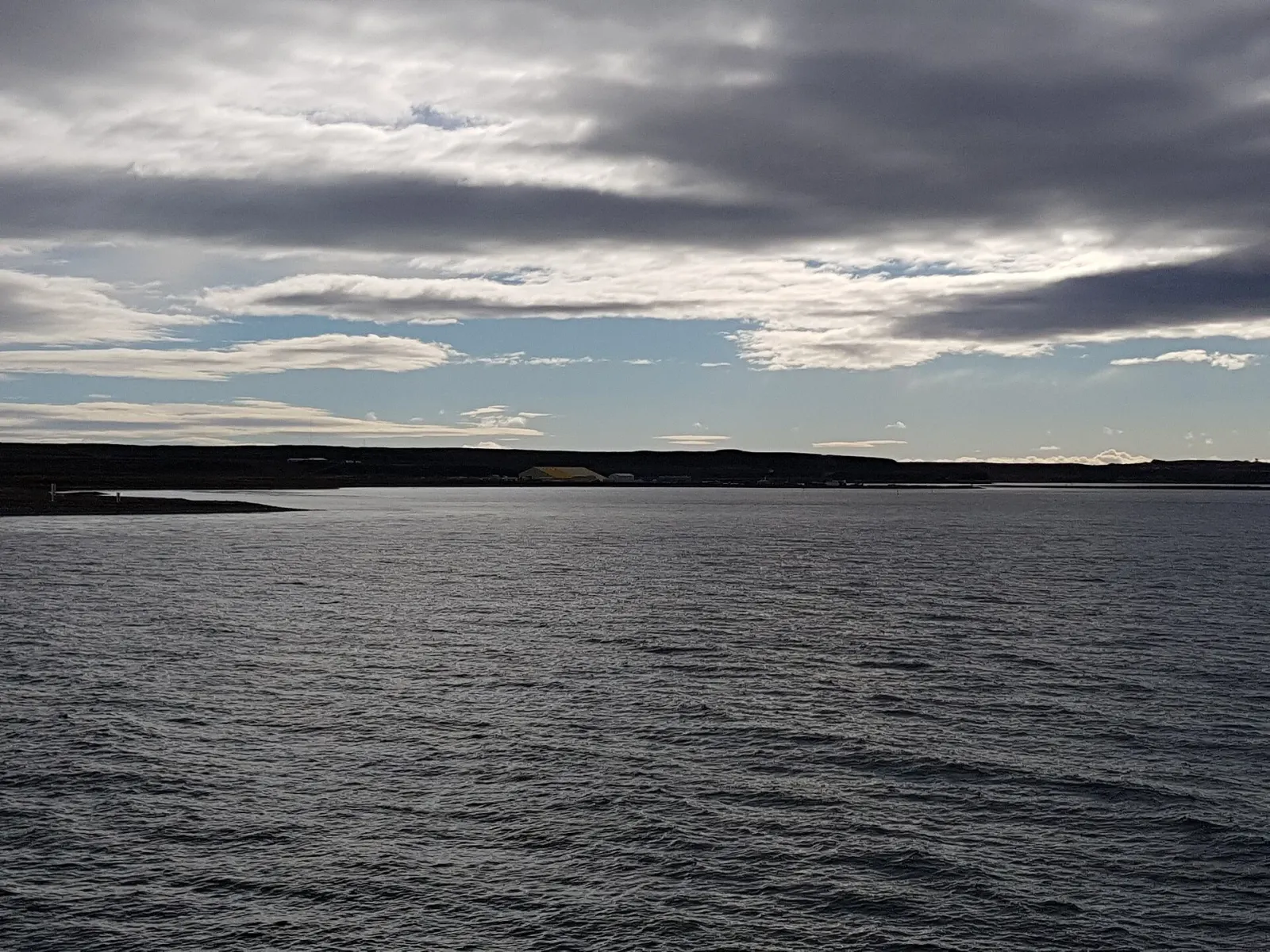
The ferry leaves from the Tres Puentes terminal, about five kilometers north of downtown Punta Arenas, and arrives at Bahía Chilota, some five kilometers from Porvenir. It’s a couple of hours on the water, depending on the vessel and the sea, and it’s best treated as part of the outing rather than a chore. If you’re driving through the north, there’s another way onto the island: the short crossing at the Primera Angostura narrows.
The Strait is home to the Commerson’s dolphin (tonina overa), a small black-and-white dolphin that usually travels in small groups and is seen more often in spring and summer. It may show up beside the boat, or it may not: there’s no way to promise it.
What you do need to keep in mind is the wind. When the sea doesn’t allow safe sailing, the crossing is suspended, which is why no plan in Tierra del Fuego should depend on getting back just in time to catch a flight.
A waterfront that remembers
The waterfront is Avenida Santa María. There you’ll find Ulem, a monument dedicated “to the Selk’nam Spirit,” and, on the same waterfront, the sculpture of a Selk’nam hunter. The town also has a sculpture group depicting a Selk’nam family. They aren’t there for decoration: they are how Porvenir names the people who were here first.
Mirador Hain
The Mirador Hain lookout offers a panoramic view of the town, and it’s worth knowing what its name refers to. The hain was the great ceremony of the Selk’nam: a secret society of men, closed to women, in which young men were initiated and the men embodied the spirits with masks and body paint. It also served to bring together groups who lived far apart.
One of the last was held in 1923, and the priest and ethnologist Martin Gusinde photographed it. Those images are now among the main surviving records of the ceremony.
Laguna de los Cisnes
Six kilometers north of town, along a gravel road, lies Laguna de los Cisnes Natural Monument, protected since 1982 and managed by CONAF. What’s protected isn’t the whole lagoon but its islets, some 25 hectares.
It is a cold salt lagoon—in one December sampling it was saltier than seawater—with living microbialites and subfossil outcrops: structures formed by communities of microorganisms that trap and bind minerals. Stromatolites, one type of microbialite, are among the oldest fossils on the planet, and the microorganisms that built them helped fill the atmosphere with oxygen. One scientific study proposes the lagoon as a natural laboratory for tracking climate change.
October through March, the nesting season, is the best time for birds. Species recorded at the lagoon include the black-necked swan, coscoroba swan, Chilean flamingo, ashy-headed goose (canquén), upland goose (caiquén), crested caracara (carancho) and several species of ducks.
The rules are CONAF’s: no camping, no entering nesting areas or disturbing the birds, no fires, drones or pets, and your trash leaves with you.
Making the most of the day
- Start early and confirm the ferry departure that same day: schedules change with the season and the weather.
- You’ll see more with a car. Without one, the town and waterfront are easy to cover on foot; the lagoon is far enough that it’s best reached by vehicle.
- Layers and a windbreaker. In Tierra del Fuego, the wind can change how cold it feels in minutes.
Last reviewed
See the full guide to Porvenir