By Equipo VivePatagoniaEditorial team
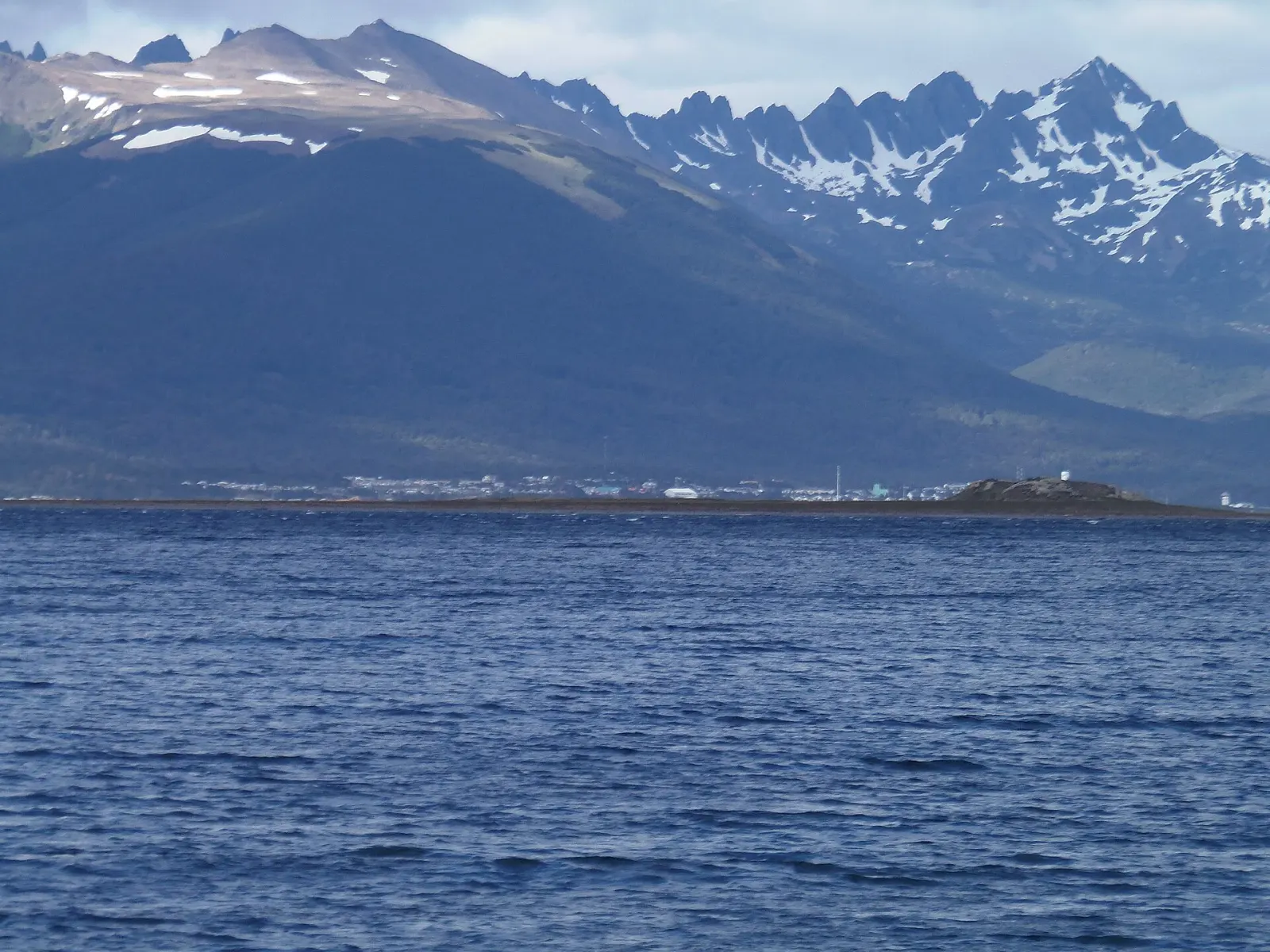
Long before Puerto Williams existed, these channels had names and people who navigated them. Telling that story without turning it into a backdrop means starting with the basics: the Yagán people are not a memory. They have a community, their own organization and a voice to say how they want to be spoken about.
Six thousand years by canoe
The oldest dates shown at the Puerto Williams museum go back more than six thousand years: some 6,495 years before present at Punta Guerrico, around 6,120 at Seno Grandi and about 6,400 on the Argentine shore of the Beagle.
Life revolved around the canoe. The family was the political, social and economic unit, and it traveled with all its belongings aboard. Canoes were built in spring, when the bark is fresh and pliable. In them, the men rode up front with harpoons and spears; the children in the middle, tending the fire; and the women at the back, paddling. It was the women who moored the canoe on arrival. Swimming and diving were learned from childhood.
The museum that changed its name
For decades the town’s museum was called the Museo Antropológico Martin Gusinde, after the priest and ethnologist who made four expeditions to Tierra del Fuego between 1918 and 1924. At the request of the Comunidad Indígena Yaghan de Bahía Mejillones (Yaghan Indigenous Community of Bahía Mejillones), and after a renovation lasting about two years, it reopened in 2024 as the Museo Territorial Yagán Usi – Martín González Calderón. Yagán Usi means “Yagán territory,” and Martín González Calderón was a tradition-bearer of the community, an expert in ancestral canoe navigation, who worked with the museum and died in 2020.
The first floor spans more than six thousand years of settlement, navigation, hunting and basketry. On display are 29 objects returned by the Museo Nacional de Historia Natural (National Museum of Natural History) and 32 baskets woven by Yagán artisans, among them Cristina Calderón Harban and Julia González Calderón. The second floor tells of the arrival of outsiders from the sixteenth century onward.
Cristina Calderón
Cristina Calderón Harban was born in 1928 in Puerto Róbalo, on Isla Navarino, and died in 2022, at 93. She was the last native speaker of Yagán and a master of rush basketry. In 2009 she was recognized as a Living Human Treasure, and in 2016 she published, with her granddaughter Cristina Zárraga, “Memorias de mi abuela yagán” (Memories of My Yagán Grandmother).
Being the last native speaker does not mean the language died with her: the community is working to revitalize it. That’s why calling her “the last Yagán,” as you sometimes read, is a mistake.
The community
Part of the Yagán community lives in Villa Ukika, on the edge of Puerto Williams, where families moved from Bahía Mejillones. The Comunidad Indígena Yaghan de Bahía Mejillones is based there, and its relationship with that territory is not a closed chapter.
Visiting respectfully
In 2021, the community published, together with the Subdirección Nacional de Pueblos Originarios (National Sub-Directorate of Indigenous Peoples), a good-practice protocol for protecting Yagán Indigenous cultural heritage. Its principle is simple: it is the community that decides who has access to its heritage, how, and whether it may be used or shared. It’s worth reading before you go.
From there, a little common sense:
- The museum first. It’s the best way to bring some context to any conversation.
- Ask before photographing a person, a home or an object, and accept a no.
- Buy crafts from the people who make them, and don’t haggle.
- Don’t use Yagán symbols or images as decoration in photos, brands or souvenirs.
Last reviewed
See the full guide to Puerto Williams