By Equipo VivePatagoniaEditorial team
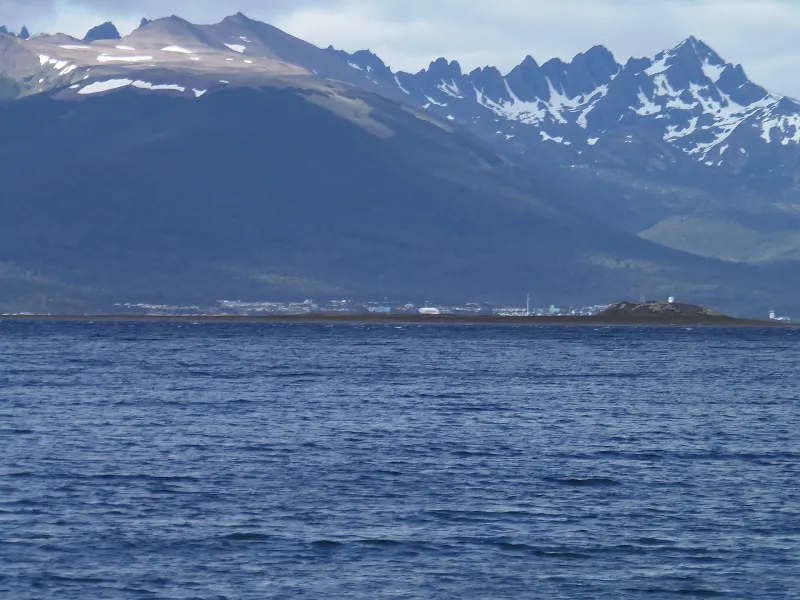
Almost everyone arrives in Puerto Williams looking up: the Dientes de Navarino, the Beagle Channel, a sky that changes several times a day. The Parque Etnobotánico Omora (Omora Ethnobotanical Park) suggests the opposite: crouch down.
A park for looking closely
Omora was born in 2000 as a private protected area, championed by ecologist Ricardo Rozzi. It covers about a thousand hectares in the Róbalo River watershed, the same one that supplies Puerto Williams with drinking water, and it serves as a long-term socio-ecological research site. Its name is the Yagán word for hummingbird.
There, Rozzi and Francisca Massardo developed what they call field environmental philosophy: an approach that brings together science, philosophy and education, and is practiced out in the field.
Ecotourism with a hand lens
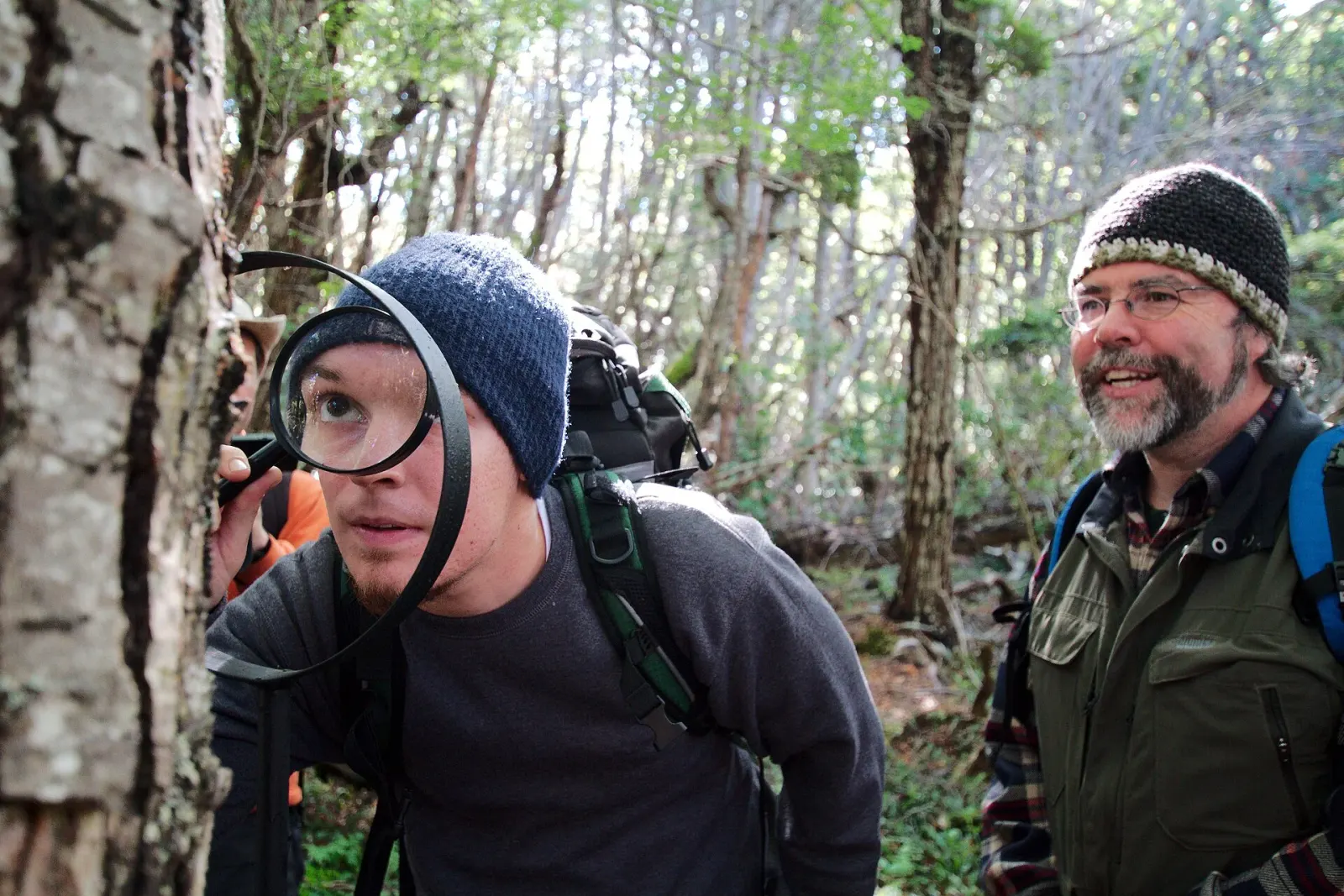
That work gave rise to ecotourism with a hand lens, a scientific, educational and tourism program that invites you to explore the forest with a magnifying lens to see ecosystems that go unnoticed by the naked eye. It brings together scientists, philosophers, educators, artists and students, and it helped popularize a phrase now used to talk about the area: the miniature forests.
A fallen log, a damp rock or the bark of a lenga beech are, seen up close, entire landscapes of mosses, liverworts and lichens, with the tiny fauna that lives among them.
Why here
The Magellanic sub-Antarctic ecoregion holds more than five percent of the world’s bryophyte species, the group that includes mosses and liverworts, on less than 0.01% of the Earth’s land surface. Across the planet, vascular plants far outnumber non-vascular ones in species; in this ecoregion, the balance tips toward the small ones.
Isla Navarino is part of the Cape Horn Biosphere Reserve, which UNESCO designated in 2005.
The center facing the channel
In 2023 the Universidad de Magallanes opened the Centro Subantártico Cabo de Hornos (Cape Horn Sub-Antarctic Center) in Puerto Williams: more than 2,500 square meters with a visitor center, an education wing and a science center with laboratories. It’s worth checking ahead which parts are open to the public.
How to look without breaking
- The lens, not your hand. Mosses and lichens grow very slowly: look without pulling or scraping.
- Stay on the trail. The forest floor is precisely what you came to see.
- Protect the water. This watershed supplies the town: no soap or trash near streams.
- Arrange it ahead. It’s worth finding out in advance how visits to the park are organized.
Last reviewed
See the full guide to Puerto Williams